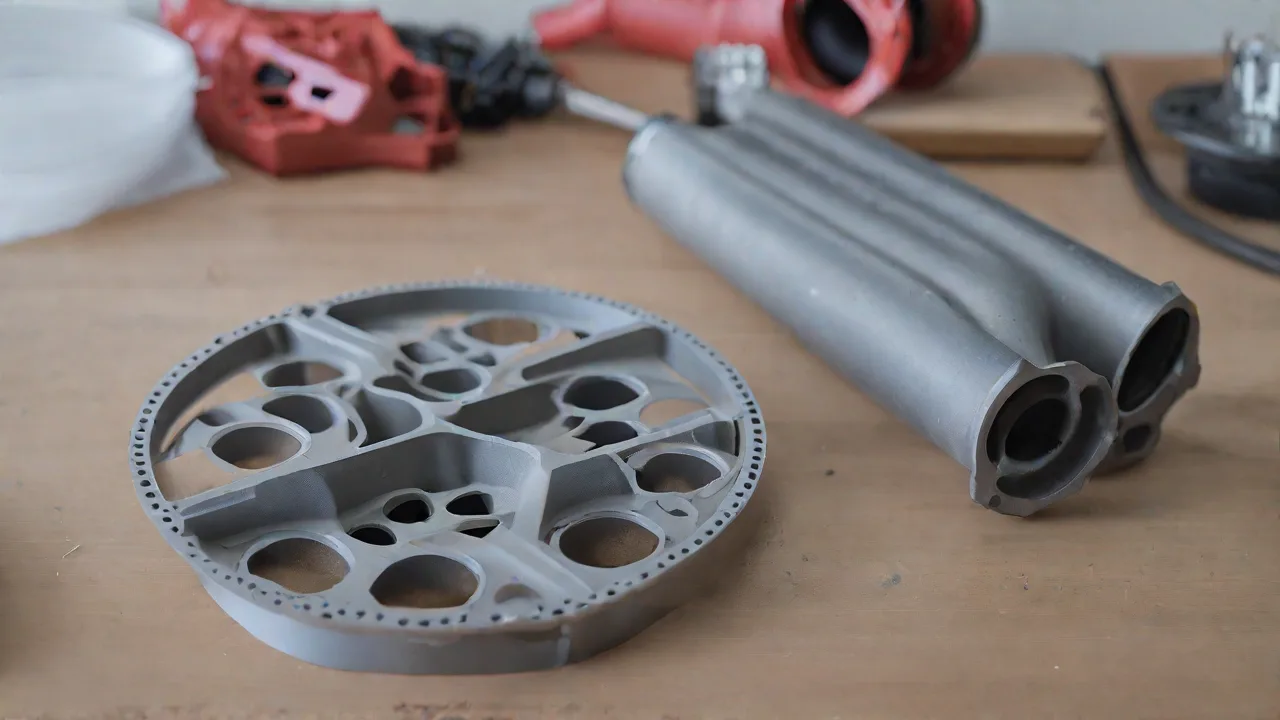
Using 3d Printing to Prototype Custom Exhaust Components
In recent years, 3D printing has emerged as a transformative technology within the automotive industry, particularly in the realm of custom exhaust system development. Traditionally, creating custom exhaust components involved time-consuming and costly processes such as machining, welding, and casting. However, the integration of 3D printing technology, also known as additive manufacturing, has dramatically reshaped how engineers and automotive enthusiasts approach prototyping and production of exhaust parts. By building components layer-by-layer directly from digital models, 3D printing allows for unprecedented speed, precision, and design flexibility in exhaust system development.
This innovative technology enables rapid prototyping, which means designers can quickly produce and test physical models of exhaust components before committing to expensive tooling and manufacturing. This capability not only accelerates the design cycle but also facilitates iterative improvements and fine-tuning of parts to optimize performance, fit, and durability. The result is a more efficient development process that reduces costs while producing highly customized exhaust solutions tailored to specific vehicles or performance goals.
Advantages of 3D Printing for Exhaust Prototyping
When it comes to developing custom exhaust components, 3D printing offers multiple distinct advantages over traditional manufacturing methods:
- Speed: One of the most significant benefits of 3D printing is the rapid turnaround time. Designers can transform a CAD (computer-aided design) model into a physical prototype within hours or days, compared to weeks or months needed for traditional fabrication methods. This speed enables faster evaluation of part fitment, airflow characteristics, and aesthetic appeal.
- Cost-Effectiveness: Traditional manufacturing, especially for low-volume or one-off parts, often involves high upfront costs for tooling, molds, and machining. 3D printing eliminates many of these expenses by building parts directly from digital files without the need for specialized tooling. This makes it economically feasible to prototype multiple design variations and test them thoroughly before final production.
- Customization: Exhaust systems can vary widely depending on vehicle type, engine configuration, and performance goals. 3D printing excels at creating complex geometries and bespoke designs that would be difficult or impossible to achieve with conventional manufacturing techniques. This flexibility enables the creation of optimized components such as intricately shaped manifolds, tailored mounting brackets, and uniquely contoured heat shields.
- Iterative Testing and Refinement: The digital nature of 3D printing allows for quick modifications to the design files based on testing results. Engineers can tweak dimensions, wall thicknesses, or flow paths and then print new prototypes in rapid succession. This iterative process leads to better-performing exhaust components that meet exact specifications and operational requirements.
- Lightweighting Potential: Additive manufacturing enables the design of internal lattices or hollow structures that reduce weight without compromising strength. Lightweight exhaust components contribute to overall vehicle efficiency and handling performance.
- Integration of Multiple Functions: Complex parts that combine several functions—such as integrated mounting points, sensor housings, or heat dissipation features—can be produced as a single piece, reducing assembly time and potential leak points.
Materials Used in 3D Printing for Exhaust Components
Material selection is a critical factor in prototyping exhaust components using 3D printing, as exhaust parts must endure high temperatures, corrosive gases, and mechanical stresses. Depending on the stage of development and intended use, different materials are employed:
- Thermoplastics (ABS, PLA): Acrylonitrile Butadiene Styrene (ABS) and Polylactic Acid (PLA) are two of the most common plastics used for initial prototype printing. They are affordable, easy to print, and suitable for verifying part geometry, fitment, and basic functionality. However, these materials have relatively low thermal resistance, making them unsuitable for functional testing under high-heat conditions.
- High-Temperature Resins and Polymers: Specialized resins and polymers designed for elevated temperature tolerance are increasingly used for functional prototyping. For instance, high-temp epoxy resins or polyether ether ketone (PEEK) can withstand temperatures beyond 200°C (392°F), allowing parts to be tested in more realistic exhaust environments. These materials also offer improved mechanical strength and chemical resistance.
- Metal Powders and Filaments: Advanced 3D printers equipped with Direct Metal Laser Sintering (DMLS) or Selective Laser Melting (SLM) technologies can print components using metal powders such as stainless steel, Inconel, titanium, and aluminum alloys. These metal parts are highly durable, heat resistant, and suitable for both prototyping and end-use applications. Metal 3D printing enables the creation of complex geometries and internal channels that would be difficult to machine conventionally.
- Composite Materials: Filaments or powders infused with carbon fiber, glass fiber, or ceramic particles enhance strength, stiffness, and heat resistance. These composites offer a balance between performance and cost, making them attractive for mid-level functional prototyping.
Choosing the right material depends on the specific requirements of the exhaust component being prototyped, including thermal exposure, mechanical loads, and intended testing methods.
Design Considerations and Best Practices for 3D Printed Exhaust Components
Successful prototyping of exhaust parts using 3D printing requires careful attention to design parameters, material properties, and printing techniques. Here are some key considerations and best practices:
- Thermal Resistance and Heat Management: Exhaust components are subjected to intense heat, especially near the engine and turbocharger areas where temperatures can exceed 900°C (1652°F). Designers must select materials capable of withstanding these conditions or limit prototypes to non-exposure areas. Additionally, incorporating heat shields, cooling fins, or channels for heat dissipation can improve part longevity.
- Structural Integrity and Load-Bearing Capacity: Exhaust systems endure vibrations, thermal expansion, and mechanical stresses. Parts should be designed with adequate wall thicknesses, reinforcement ribs, and fillets to prevent cracking or deformation. Finite Element Analysis (FEA) simulations can help predict stress points and optimize geometry.
- Print Orientation and Support Structures: The orientation of the part during printing affects surface finish, mechanical strength, and printing time. Orienting parts to minimize overhangs reduces the need for support material, which can be difficult to remove and affect surface quality. Additionally, aligning layers with the direction of stress can improve tensile strength.
- Tolerances and Fitment: 3D printed parts may exhibit dimensional variations depending on the printer resolution and material shrinkage. Designing with appropriate tolerances and allowances ensures proper fitment with mating components such as flanges, gaskets, or mounting bolts.
- Surface Finish and Post-Processing: Raw 3D printed parts often have rough surfaces that can impact airflow and cause turbulence in exhaust flow. Post-processing techniques such as sanding, polishing, vapor smoothing, or coating with high-temperature paints can improve surface quality and corrosion resistance. For metal parts, heat treatment or machining may be necessary to achieve required properties.
- Sealing and Leak Prevention: Exhaust systems must be airtight to prevent leaks that degrade performance and increase emissions. Attention to sealing surfaces and gasket interfaces during design and assembly is crucial. Printed prototypes can be tested with pressure or smoke tests to detect leaks early.
- Integration of Sensors and Accessories: Modern exhaust systems often incorporate oxygen sensors, temperature probes, and emission control devices. Designing provisions for sensor mounts and wiring pathways in the 3D model streamlines assembly and testing.
Applications of 3D Printing in Exhaust System Development
Beyond basic prototyping, 3D printing is being leveraged in various stages of exhaust system development:
- Proof-of-Concept Models: Early in the design process, 3D printed models allow engineers to validate dimensional accuracy, ergonomics, and compatibility with other vehicle components.
- Flow Optimization and CFD Validation: Prototypes with transparent or sectional features can be used for flow visualization tests or integrated with Computational Fluid Dynamics (CFD) simulations to optimize exhaust gas flow and reduce backpressure.
- Functional Testing: Parts printed in metal or heat-resistant materials can be installed on test vehicles or dyno setups to assess thermal performance, vibration resistance, and durability under real-world conditions.
- Custom and Low-Volume Production: For niche vehicles or one-off builds, 3D printing enables the production of final-use exhaust components without the need for traditional tooling, reducing lead times and costs.
- Educational and Demonstration Models: 3D printed exhaust components serve as effective teaching aids and display models at trade shows, helping to communicate design concepts and innovations.
Challenges and Limitations of 3D Printing Exhaust Components
While 3D printing offers many advantages, it is important to acknowledge current challenges and limitations:
- Material Constraints: Not all materials used in conventional exhaust systems, such as high-grade stainless steels or Inconel alloys, are readily printable or affordable. Some printed metals may exhibit porosity or anisotropic mechanical properties requiring post-processing.
- Size Limitations: The build volume of 3D printers can restrict the size of individual components. Large exhaust parts may need to be printed in sections and subsequently joined, potentially affecting strength and sealing.
- Surface Quality: Layer lines inherent in additive manufacturing can impact airflow efficiency and corrosion resistance unless adequately finished.
- Thermal Cycling Effects: Repeated heating and cooling cycles in exhaust operation can induce stresses that challenge the long-term durability of 3D printed parts, especially those made from polymers or composites.
- Cost of Advanced Equipment: High-end metal 3D printers and materials can be expensive, limiting accessibility for some small shops or hobbyists.
Case Studies: Successful Use of 3D Printing in Exhaust Development
Several automotive companies and aftermarket tuners have successfully integrated 3D printing into their exhaust system workflows, demonstrating the technology’s practical benefits:
- Performance Manifold Prototyping: A racing team used 3D printing to create lightweight, optimized exhaust manifolds featuring complex internal flow paths. The rapid prototyping allowed them to test multiple designs within a single racing season, ultimately improving engine output and reducing weight.
- Custom Turbocharger Housings: An aftermarket specialist produced bespoke turbocharger outlet housings by printing metal prototypes. This approach enabled precise fitment on modified engines with unique packaging constraints, accelerating time-to-market.
- Heat Shield Development: A manufacturer used 3D printed high-temperature polymer heat shields to protect sensitive components from exhaust heat. The shields were iteratively refined for optimal shape and thickness before producing final metal versions.
Future of 3D Printing in Automotive Exhaust Development
The future of 3D printing in the automotive exhaust sector looks promising, driven by continuous advancements in technology and materials science. Emerging trends include:
- Enhanced Materials: Development of new high-temperature alloys, ceramic composites, and heat-resistant polymers will expand the functional applications of 3D printed exhaust parts, enabling direct production of end-use components capable of long-term service.
- Multi-Material Printing: Advances in printers capable of depositing multiple materials simultaneously will allow integration of heat-resistant ceramics, metals, and insulating layers into a single part, improving performance and durability.
- Increased Build Volumes and Speed: Larger and faster printers will enable production of full-scale exhaust assemblies, reducing the need for assembly and joining.
- Integration with Digital Twin and Simulation Technologies: Combining 3D printing with advanced simulation and digital twin models will streamline design optimization, allowing virtual testing followed by quick physical validation.
- Mass Customization: As additive manufacturing becomes more accessible, automakers and aftermarket suppliers will be able to offer highly customized exhaust solutions tailored to individual customer preferences and vehicle modifications.
- Environmental Benefits: By minimizing material waste, reducing transportation needs, and enabling lighter exhaust components that improve fuel efficiency, 3D printing contributes to greener automotive manufacturing practices.
Overall, the integration of 3D printing into exhaust system development represents a paradigm shift that enhances innovation, reduces costs, and accelerates time-to-market. As the technology matures, it will become an indispensable tool for engineers and enthusiasts pushing the boundaries of automotive performance and customization.